What is Panic disorder?
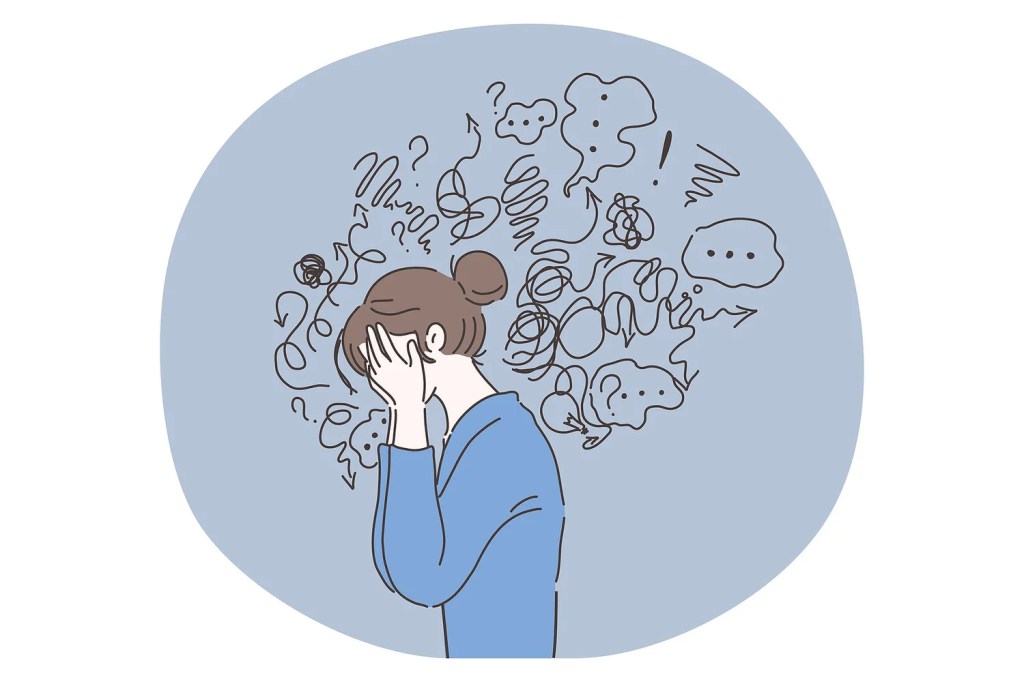
Panic disorder is a type of anxiety disorder which can be described as a vicious cycle of recurrent and unexpected panic attacks. These attacks often happen when there is no real danger to the individual and can lead to physical symptoms. An example of this is when an individual is experiencing a panic attack they could mistake it for a possible heart attack.
What are panic attacks:
Panic attacks are sudden and unexpected episodes of fear that trigger severe physical reactions without there being any real danger. In this time the body switches to its instinctive survival mode. These episodes can be described as a “false alarm” to the nervous system. These attacks are usually triggered by certain situations. During said attacks, the experiencer could mistake the panic attacks for a heart attack, losing control and even sometimes death.
Symptoms of a panic attack:
Panic attacks include a list of multiple symptoms, both emotional and physical, including but not limited to:
- Rapid or pounding heart rate
- Sweating
- Trembling or shaking
- Chest pains
- Headaches
- Dizziness
- Lightheadedness or faintness
- Hot flashes
- Nausea
Possible causes of panic disorder?
Panic disorder is not caused by one specific issue, and the cause has not been fully identified. However, researchers believe the disorder is a result of a combination of factors. Some possible causes include, but are not limited to:
- Genetics
Panic disorder can be inherited from family members, however not all members of the family inherit it. In contrast to disorders which are passed down through dominant and or recessive genes, panic disorder does not follow Mendelian inheritance. Panic disorder is passed in a more complex manner with the help of other factors like the ones listed below.
- Major or choric stress
Major or chronic stress turns the body into fight or flight mode. With stress being one of the most common factors for both panic attacks and panic disorder—with 80-100% of an individual’s first panic attack being linked to extreme stress. However, this is not to say all first panic attacks are a result of intense stress, an individual’s first panic attack can also be caused by almost nothing at all.
- Health conditions
Health conditions have many effects on an individual that can increase the risk of panic disorder. Various conditions can either cause an escalation in stress, anxiety and even a change in the brain’s biology. Examples of these health conditions include asthma and heart conditions.
- The individuals environment
An individual’s environment can cause panic attacks in many ways. Environmental factors such as the loss of a loved one, everyday pressure, substance use, separation, traumatic events and other sudden life changes can often result in a spike in stress and anxiety.
- The brains biology and chemistry
Panic attacks are often the result of chemical imbalances. The Amygdala is the fear center of the brain. Neurotransmitters in the brain include Glutamate, GABA, cholecystokinin, adenosine, dopamine, and norepinephrine. In mouse studies, the research reveals that there was an increase in one of the chemicals, Glutamate, along with anxiety behaviors. Often when there are some sort of chemical imbalances the brain’s alarm system can misfire signals to both the nervous system and hormonal system, initiating the body into fight or flight mode. Scientists have also observed that chemical imbalances are linked to many other disorders such as depression and anxiety.
Problems that may form if left untreated/undiagnosed:
- Development of phobias
- The anxiety in panic disorder can cause many phobias such as a fear of driving and or leaving your home
- Social problems
- This includes avoidance of social interactions and problems at work or school. The anxiety those with panic disorders experience can create awkwardness and or nervousness in social interactions.
- Psychiatric disorders
- Since panic disorders involve large anxiety and physical pain, medical and health conditions, or psychiatric disorders like depression, anxiety disorders and more can develop if panic disorder is left undiagnosed.
- Alcohol or other substance abuse
- The individual struggling with panic disorder might develop some sort of substance abuse as a coping mechanism to relieve the severe anxiety they are experiencing.
- Increased risk in suicide or suicidal thoughts
- Similar to the development of substance abuse, the anxiety and pain those with panic disorder experience may be so harsh that they might find the only solution to relieve themselves of this pain is suicide.
Treatments & coping mechanisms:
- Support groups
- Panic disorder is a scary, draining experience in which the experiencer often feels extremely unsafe. The purpose of support groups is to provide a safe and nonjudgemental environment in which individuals can confide themselves in others who understand the experience and pain they go through. Additionally, support groups can teach other participants various coping mechanisms while providing support, comfort, motivation and hope.
- Psychotherapy or Talk therapy
- Psychotherapy is also known as talk therapy. This therapy is meant to help you understand the panic attacks and how to cope with them in the future. There are many forms of psychotherapy, all with the purpose of helping individuals overcome their fears and learning how to grow with the panic attacks.
- 5-4-3-2-1 grounding technique
- This is an anxiety method in which the individual is meant to identify five things around them, four items they can touch, three things they can hear, two things they can smell, and one thing they can taste. The purpose of this method is to help ground anxious individuals during their episodes.
- 333 rule
- Similar to the 5-4-3-2-1 method, the 333 method is also meant to help ground and calm yourself when feeling anxious or overwhelmed. In this exercise the individual is meant to identify three things they can see, three sounds they can hear and 3 things they can touch.
- The cyclic sigh
- In this technique, the individual is meant to inhale through their nose, then they take a deep breath, fully expanding their lungs, and slowly exhaling. The recommended time to spend participating in this is about five minutes. Researchers observe a report of lower anxiety, along with an increase in peace and energy.
- Medications
- When diagnosed with panic disorder, is it common for the doctor to prescribe certain antidepressants or various other medications with the purpose of keeping an individual calm and grounded in their everyday life.
References:
“Everything You Need to Know About Panic Attacks From a Therapist for Panic Attacks in Columbia, MO.” Aspire Counseling, aspirecounselingmo.com/blog/everything-you-need-to-know-about-panic-attacks. Accessed 28 Oct. 2026.
glstemplate. “Why and How Could Panic Disorder Be Hereditary? – Long Island Counseling Services.” Long Island Counseling Services, 5 Dec. 2024, longislandcounselingservices.com/why-and-how-could-panic-disorder-be-hereditary/.
Goddard, Andrew W. “The Neurobiology of Panic: A Chronic Stress Disorder.” Chronic Stress, vol. 1, no. 1, Jan. 2017, p. 247054701773603, https://doi.org/10.1177/2470547017736038.
Johnson, Jacquelyn. “The 333 Rule for Anxiety and Other Coping Strategies.” Healthline, 28 July 2022, http://www.healthline.com/health/333-rule-anxiety.
Mayo Clinic. “Panic Attacks and Panic Disorder – Diagnosis and Treatment – Mayo Clinic.” Mayoclinic.Org, Mayo Clinic, 4 May 2018, http://www.mayoclinic.org/diseases-conditions/panic-attacks/diagnosis-treatment/drc-20376027.
———. “Panic Attacks and Panic Disorder – Symptoms and Causes.” Mayo Clinic, 4 May 2018, http://www.mayoclinic.org/diseases-conditions/panic-attacks/symptoms-causes/syc-20376021.
Medline Plus. “Panic Disorder.” Medlineplus.Gov, National Library of Medicine, 2019, medlineplus.gov/panicdisorder.html.
Mental Health Foundation. “Long-Term Physical Conditions and Mental Health.” Mental Health Foundation, 18 Feb. 2022, http://www.mentalhealth.org.uk/explore-mental-health/a-z-topics/long-term-physical-conditions-and-mental-health.
Moitra, Ethan, et al. “Impact of Stressful Life Events on the Course of Panic Disorder in Adults.” Journal of Affective Disorders, vol. 134, nos. 1–3, Nov. 2011, pp. 373–76, https://doi.org/10.1016/j.jad.2011.05.029.
Na, Hae-Ran, et al. “The Genetic Basis of Panic Disorder.” Journal of Korean Medical Science, vol. 26, no. 6, 2011, p. 701, https://doi.org/10.3346/jkms.2011.26.6.701.
National Institute of Mental Health. “Panic Disorder: When Fear Overwhelms.” National Institute of Mental Health, 2022, http://www.nimh.nih.gov/health/publications/panic-disorder-when-fear-overwhelms.
NHS. “Panic Disorder.” Nhs.Uk, NHS, 16 Feb. 2021, http://www.nhs.uk/mental-health/conditions/panic-disorder/.
“Panic Attacks | Tools to Regain Calm and Control.” Saprea, 11 June 2025, saprea.org/heal/panic-attacks/?gad_source=1&gad_campaignid=17671511022&gbraid=0AAAAADK-7cZ5s6lsEo7AFn2RFrdCHZhG2&gclid=CjwKCAjw857RBhAgEiwAI-1yKGkaXfo8IwMi_JFLOh4G16iOSsNzpkzqGg1Hu20fldf6jaeluqGY8BoCdOYQAvD_BwE. Accessed 10 June 2026.
PK, and MK. “Checking Your Browser – reCAPTCHA.” Nih.Gov, 2024, pmc.ncbi.nlm.nih.gov/articles/PMC9924294/#B15. Accessed 10 June 2026.
Smith, Sara. “5-4-3-2-1 Coping Technique for Anxiety.” Www.Urmc.Rochester.Edu, 2018, http://www.urmc.rochester.edu/behavioral-health-partners/bhp-blog/april-2018/5-4-3-2-1-coping-technique-for-anxiety.
UHS-doverbehavioral. “What’s The Difference Between Panic Attacks & Anxiety Attacks?” Doverbehavioral.Com, 2019, doverbehavioral.com/blog/panic-attack-vs-anxiety-attack-whats-the-difference/.

